
Today, let's talk about skincare, more specifically, facial skincare. One thing about me is that I thrive on routine. If something will have me do a series of actions repetitively at a constant time of day, I am in. I get antsy when my everyday normal is broken. Like something bad's going to happen. Like big bad. Like end-of-the-world bad. I wake up every day at 4, but for some strange reason, I wake up just a few minutes before my alarm goes off. On the very few days that I get woken up by that alarm, I feel so stressed already that I can't even do my usual morning toilet thingy. If I'm not at my desk by 6 and not having coffee by 6.30, there'll be lines on my forehead all morning. Like wrinkles.
And speaking of wrinkles, they're at the top of my concerns lately. More important than world peace and deep sea exploration. (World peace is a nice idea and everything, but honestly, farting rainbows or sweating glitter is far more achievable. We're too emotional as a species, too diverse in our thinking. I guess what we can do is to work toward WP. But let's face it, we'll never get there.) When I hit 40, I've googled "how to avoid getting wrinkles," "how to prevent having that old people smell," "should I sunblock?" and "paul rudd doesnt age, is he even human?"
Which, of course, leads me to skincare, specifically Asian skincare.
If you haven't an idea what makes Asian skincare different from, say, Western skincare methods, just google it. You'll be surprised by the number of steps it takes, usually 10 to 12 steps. I know someone who does 15. Of course, the more steps you do, the more people become more judgmental on your physical appearance. They be thinking, "Oy, those 15 steps aren't worth it. Look at her pores." I started with doing around 8. Now, I just stick to 5. And 3 if I'm too lazy, which is like 66.6% of the time.
I have terribly oily skin. Crack an egg on my face in the summer and I'm sure it'll get fried. My skin's terribly oily it gives Arab countries a run for their money. One thing going for it though, as many people say, is that it'll take some time before I get any wrinkles. But I still don't wanna get there, no? Also, I don't think it's necessarily true, as I noticed a few lines here and there, mostly around the eye area. (That's why when I know a pic is going to be a little bit of a close up, I'd prefer not to fully smile. Better a resting bitch face than one with wrinkles.) Then there's the bf, who has such beautiful skin that I kinda hate him for it. I kid, of course. When we have pics together, I thank the gods for those photo filters. I have thicker hair though. So there's that. Small victories.
Anyway, I fell for the discipline that this skincare entails. In the evenings, first I wash my face with an oil cleanser. Then I wipe it dry or rinse it with lukewarm water. I usually do this in the shower though. Saves me the effort of cleaning up the sink because I'm, like, splashy all over the place when I do everything at the sink. Second, I use a facial cleanser to cleanse for the second time. Double cleansing, guys. Literally life changing. Then I pat dry, and, third, I apply a toner. This is where my geeky self rejoices, as toning has something to do with bringing your skin's pH to the correct level. The last time I used pH in writing was back in college, during titration lessons, when I pretended that I really was interested. (Back in college, for classes that are really difficult, I always sat in front and put on a very enthusiastic face. Then I stayed a few minutes after class to ask the professor, "Sir, can you recommend other books to read on the topic?" I actually think they creamed their pants answering this. But of course, I was just putting on a show. Was just trying to earn bonus points.)
So now I'm a third of the way done with the routine. Fourth, I put on exfoliants, which is something I try not to skip because, again, oily skin. It's BHA (for blackheads) first, then a 20-minute wait, then AHA (for whiteheads), then another 20-minute wait before I go on with the fifth step, putting on essence. Ah, essence, a few years ago, if you told me that I'll be putting on snail slime on my face, I'd stab you with a blunt knife. But it's become my go-to ingredient for an essence. That thing actually works. Snail goo does wonders for those fine lines. I'm not too sure what kind of snails they get the slime from, but I think it ain't the garden variety, the ones you pick, lay on the ground, put salt on, and watch in glee while the poor mollusks writhe and bubble. So sorry for this, snails. I know karma's a bitch, so I hope I won't be a snail in my next life.
So I'm almost all the way through. Sixth, I put on a face mask on most days, or when I've a special event the following day. The face mask thing goes on my face for at least 30 minutes. Most instructions for these would say to put them on for only 15 to 20 minutes. But these things can be costly, so I'll milk the hell out of them. Also, I get a lot of reading while having a face mask on. Although it looks weird to have a lie in bed with a face mask with my reading glasses. So, privacy. Then finally, I take the mask off and put on a moisturizer. (The term moisturizer is so 90s and 00s. I believe it's called hydrating lotion now. I am shookt.) In the morning, I'd repeat the same steps but leave out the exfoliants and masks but put on a sunblock as the last step. The sunblock is supposedly the most important step. Never mind that the sun powers the process of photosynthesis or that it's the ultimate source of energy on our planet. The sun isn't your skin's best friend.
Have I exhausted you with these steps, dear readers? Just imagine doing them every night for more than a year, then we'll talk. All these usually take about more an hour at least. But I've managed to sneak a few tasks during the wait times. Like check Instagram or read. Or prepare my overnight oats, because I can't get enough of fiber. Funny thing is, there's a ton of product on my face, but I've managed to skip another product altogether, the deodorant. I noticed my father doesn't use one, and his siblings too. So, being the amateur scientist that I am, I experimented. I skipped deodorant for a week, and there hasn't been any effect (i.e., no body odor). Of course, I had to go the restroom every now and then to check, and I carried a deodorant in my bag just in case. But there hasn't been any smell. But I need more robust data. So I didn't use deodorant when I exercised and rode the bike. Happy dance all around, as there still wasn't any smell. I read somewhere that there's a small percentage of people who can get by without using deodorant. Something to do with possessing a gene or something that inhibits bacterial growth.
I'm still not sold on eye creams though. I tried using three different brands before and I wasn't able to note any changes. And they're quite costly. When a product costs for a significant fraction of my salary, then it better work. I've no patience anymore to keep on testing, so I decided to make do without. Also, another product that I've been using less is shampoo. I used to shampoo every day. Now I'd jsut go with once every week. Sometimes I'd go for 2 weeks without using it, and it's perfectly fine. (Fine meaning no dandruff, no falling hair, no oiliness, no lice and other creatures making an ecosystem on my scalp.) So all the spare bottles of shampoo that I bought before are for my dad, who uses shampoo a lot. And he doesn't even have long hair.

This weekend's books in my bag. Still reading these. The Good Son is proving to be one thrilling read. I love unreliable narrators in novels—Briony Tallis in Atonement, Amy and Nick in Gone Girl, Frank Cauldhame in The Wasp Factory, and Merricat Blackwood in We Have Always Lived in the Castle. I love it when I read something that I don't see coming. And when the reveal is so shocking I'm floored.
And speaking of wrinkles, they're at the top of my concerns lately. More important than world peace and deep sea exploration. (World peace is a nice idea and everything, but honestly, farting rainbows or sweating glitter is far more achievable. We're too emotional as a species, too diverse in our thinking. I guess what we can do is to work toward WP. But let's face it, we'll never get there.) When I hit 40, I've googled "how to avoid getting wrinkles," "how to prevent having that old people smell," "should I sunblock?" and "paul rudd doesnt age, is he even human?"
Which, of course, leads me to skincare, specifically Asian skincare.
If you haven't an idea what makes Asian skincare different from, say, Western skincare methods, just google it. You'll be surprised by the number of steps it takes, usually 10 to 12 steps. I know someone who does 15. Of course, the more steps you do, the more people become more judgmental on your physical appearance. They be thinking, "Oy, those 15 steps aren't worth it. Look at her pores." I started with doing around 8. Now, I just stick to 5. And 3 if I'm too lazy, which is like 66.6% of the time.
I have terribly oily skin. Crack an egg on my face in the summer and I'm sure it'll get fried. My skin's terribly oily it gives Arab countries a run for their money. One thing going for it though, as many people say, is that it'll take some time before I get any wrinkles. But I still don't wanna get there, no? Also, I don't think it's necessarily true, as I noticed a few lines here and there, mostly around the eye area. (That's why when I know a pic is going to be a little bit of a close up, I'd prefer not to fully smile. Better a resting bitch face than one with wrinkles.) Then there's the bf, who has such beautiful skin that I kinda hate him for it. I kid, of course. When we have pics together, I thank the gods for those photo filters. I have thicker hair though. So there's that. Small victories.
Anyway, I fell for the discipline that this skincare entails. In the evenings, first I wash my face with an oil cleanser. Then I wipe it dry or rinse it with lukewarm water. I usually do this in the shower though. Saves me the effort of cleaning up the sink because I'm, like, splashy all over the place when I do everything at the sink. Second, I use a facial cleanser to cleanse for the second time. Double cleansing, guys. Literally life changing. Then I pat dry, and, third, I apply a toner. This is where my geeky self rejoices, as toning has something to do with bringing your skin's pH to the correct level. The last time I used pH in writing was back in college, during titration lessons, when I pretended that I really was interested. (Back in college, for classes that are really difficult, I always sat in front and put on a very enthusiastic face. Then I stayed a few minutes after class to ask the professor, "Sir, can you recommend other books to read on the topic?" I actually think they creamed their pants answering this. But of course, I was just putting on a show. Was just trying to earn bonus points.)
So now I'm a third of the way done with the routine. Fourth, I put on exfoliants, which is something I try not to skip because, again, oily skin. It's BHA (for blackheads) first, then a 20-minute wait, then AHA (for whiteheads), then another 20-minute wait before I go on with the fifth step, putting on essence. Ah, essence, a few years ago, if you told me that I'll be putting on snail slime on my face, I'd stab you with a blunt knife. But it's become my go-to ingredient for an essence. That thing actually works. Snail goo does wonders for those fine lines. I'm not too sure what kind of snails they get the slime from, but I think it ain't the garden variety, the ones you pick, lay on the ground, put salt on, and watch in glee while the poor mollusks writhe and bubble. So sorry for this, snails. I know karma's a bitch, so I hope I won't be a snail in my next life.
So I'm almost all the way through. Sixth, I put on a face mask on most days, or when I've a special event the following day. The face mask thing goes on my face for at least 30 minutes. Most instructions for these would say to put them on for only 15 to 20 minutes. But these things can be costly, so I'll milk the hell out of them. Also, I get a lot of reading while having a face mask on. Although it looks weird to have a lie in bed with a face mask with my reading glasses. So, privacy. Then finally, I take the mask off and put on a moisturizer. (The term moisturizer is so 90s and 00s. I believe it's called hydrating lotion now. I am shookt.) In the morning, I'd repeat the same steps but leave out the exfoliants and masks but put on a sunblock as the last step. The sunblock is supposedly the most important step. Never mind that the sun powers the process of photosynthesis or that it's the ultimate source of energy on our planet. The sun isn't your skin's best friend.
Have I exhausted you with these steps, dear readers? Just imagine doing them every night for more than a year, then we'll talk. All these usually take about more an hour at least. But I've managed to sneak a few tasks during the wait times. Like check Instagram or read. Or prepare my overnight oats, because I can't get enough of fiber. Funny thing is, there's a ton of product on my face, but I've managed to skip another product altogether, the deodorant. I noticed my father doesn't use one, and his siblings too. So, being the amateur scientist that I am, I experimented. I skipped deodorant for a week, and there hasn't been any effect (i.e., no body odor). Of course, I had to go the restroom every now and then to check, and I carried a deodorant in my bag just in case. But there hasn't been any smell. But I need more robust data. So I didn't use deodorant when I exercised and rode the bike. Happy dance all around, as there still wasn't any smell. I read somewhere that there's a small percentage of people who can get by without using deodorant. Something to do with possessing a gene or something that inhibits bacterial growth.
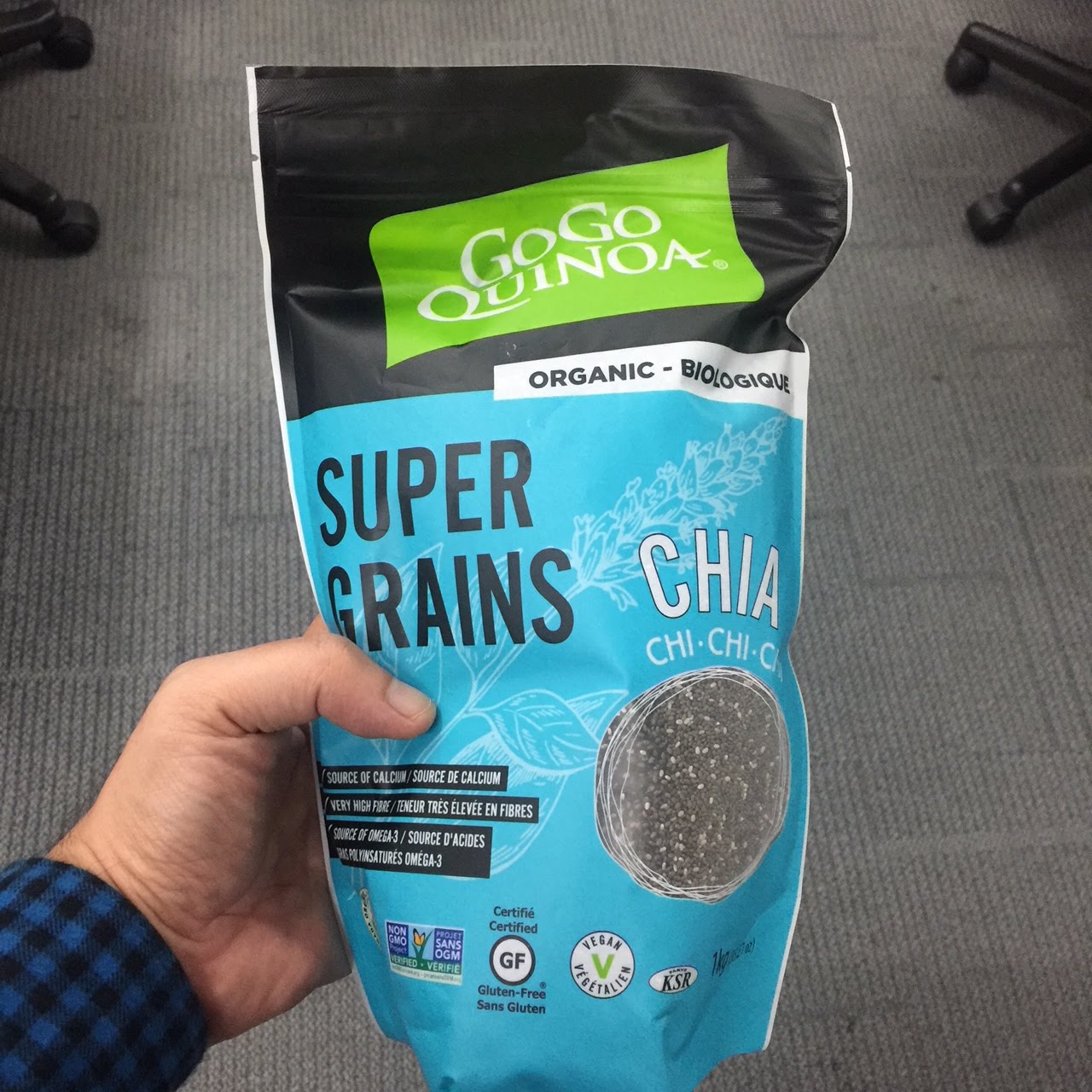 |
| I asked an officemate to buy me chia seeds at an outlet store, as they're terribly expensive at Healthy Options. She bought this. So now I have a year's supply. |

This weekend's books in my bag. Still reading these. The Good Son is proving to be one thrilling read. I love unreliable narrators in novels—Briony Tallis in Atonement, Amy and Nick in Gone Girl, Frank Cauldhame in The Wasp Factory, and Merricat Blackwood in We Have Always Lived in the Castle. I love it when I read something that I don't see coming. And when the reveal is so shocking I'm floored.


