Every once in a while, you read a novel that's so beautiful beyond words that you just can't imagine your review doing justice to it. So, I'm not going to bother with all that analysis of writing styles, narrative, and themes. Instead, I'll just be gushing over John Williams's novel,
Stoner.
Stoner is probably one of the best adult fiction I've read, ever. The character of William Stoner is one that will indelibly remain in my conscious reading life. But what's more amazing is that, as a character, Stoner doesn't do anything spectacular. In the novel, Stoner seems to be just going with whatever fate throws at him.
Stoner, which is written in a refreshingly linear fashion, we are taken through the entire life of Stoner -- from his beginnings as a son of a farmer and his wife, to the time of his retirement from teaching literature in a university. If the story seems too simple, it's just because it really is. But John Williams, in this semi-autobiographical novel, chooses to focus on the whole gamut of emotions that Stoner experiences. The result is one very rich work of fiction that you want to finish in one sitting. It is that rewarding, I tell you.
Of course, this isn't a "happy" novel, with its subplots of emotionally abusive marriage (Stoner and his wife) university politics (Stoner and the chairman of the department), adulterous relationships (Stoner and a colleague), and how not to raise a child (Stoner and his daughter). Saying that
Stoner is heartbreaking would be an understatement.
At the end of the novel, I keep asking myself why would Williams choose to write about a character who seem to have made such bad decisions on his life. His choosing to study literature instead of agriculture seems to be the only redeeming decision that he has ever made. Other than this, everything seems to be going against Stoner's favor: he marries a woman who doesn't love him; he lets his wife take control of the raising of their child, resulting in their daughter becoming one messed-up individual. I guess, Williams is a realist. Bad things do happen to people, and they happen a lot.
Stoner doesn't fall into the trap of being highly romanticized. Its story is straightforward, and its characters are people that you expect to meet if you do live in a university town. There's no heavy introspection on the part of Stoner that would make the novel too pedantic. Dear reader, if you're going to read one novel this year, let
Stoner be it.
Read this book if:
- You're longing for good (if not the best) literary fiction.
- You've also made bad decisions on your life.
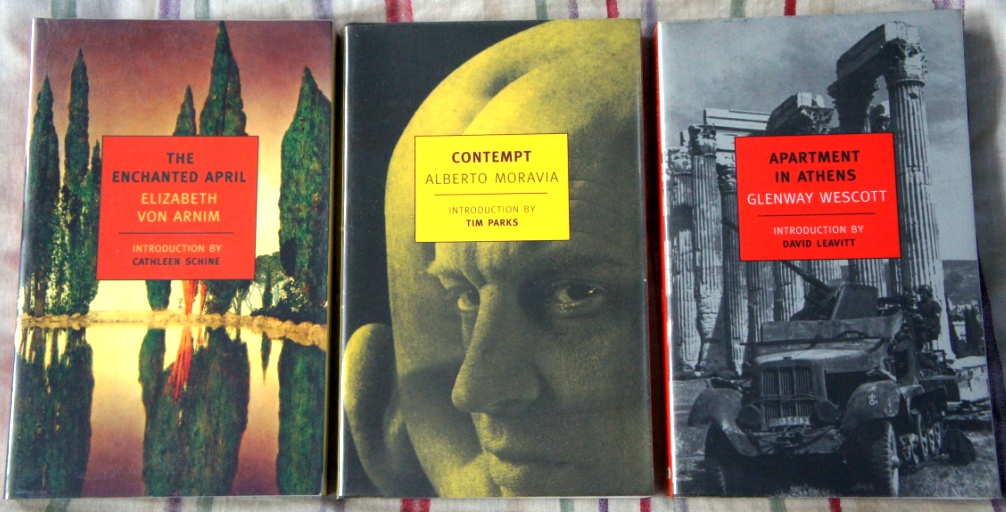
- You'll read anything published by the NYRB.